Myofunctional Therapy

Surprisingly I found myself completely fascinated with Myofunctional Therapy, which is the art and science of correct mouth posture and movement.
Perhaps, even more surprising is that I found that most people don’t know that there is a correct resting mouth posture and what it is. And they most certainly don’t know that for a wide variety of health reasons, it should be maintained like that all day and all night, 24/7, except when we eat and talk.
I also was surprised that most people I talked to about this have shared with me that they suffer from one or more of the common issues myofunctional therapy can help. They mentioned that they absolutely had no idea that there is anything, let alone something rather simple, they can do about it.
These common concerning issues include teeth grinding, jaw pain and clenching, snoring, sleep apnea, drooling and mouth breathing. Mouth breathing is an issue that unfortunately most people don’t even recognize as a problem!
Perhaps it’s not fully surprising that I’m so fascinated with myofunctional therapy, since at its core essence it is a way to develop awareness and learn the basic correct posture of the mouth, tongue, lips, jaw and teeth. And how these can work together to breathe and rest correctly. Once they actually do work in alignment together, we are able to breathe, sleep, rest, eat, talk and function in a relaxed and healthy way. This can significantly improve our lives, the quality of both our awake and sleeping state.
Yes, there is a correct way to rest in our mouth, a healthy position, and we are supposed to be in that position twenty-four hours a day, non-stop, except when talking or eating.
We can learn this and it is quite simple.
What is a Correct mouth posture?
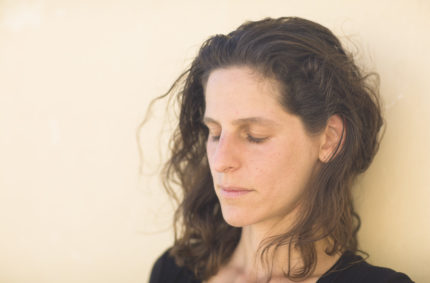 Nose breathing, lips together, jaw relaxed downwards, teeth not touching, tongue raised to the upper part of the mouth, behind the teeth but not touching the teeth, sucked into the top palate.
Now, reread the above paragraph and try to bring your full attention to your body, your breath, mouth, lips, tongue, upper palate, lower palate.
Are you able to close your lips without your teeth touching? Can you breathe only through your nose? Are your nostrils open and clear?
Can you gently relax your jaw downwards? Can you let your tongue float upward and feel it sucked into the upward curve in your upper palate? Can it rest there?
Can your tongue avoid touching your teeth while it is sucked to the top of your palate? Can you maintain this position as you are reading these words? Can you maintain it until you finish reading this article? Can you maintain it until you need to speak or eat; can you return to it once you finish speaking or eating. Can you maintain it while lying down flat? Can you maintain it until you fall asleep?
Yes, this is the right way and the correct way to be. All the time.
Make sure to relax the jaw downward, breathe only through the nose, suck the tongue upward into the natural upper curve in the upper palate. Keep reminding yourself these key points until they become natural and completely effortless.
Challenges
 As with all therapies, myofunctional therapy is born to fix a problem or an unhealthy situation, to correct, adjust and improve habits that have a negative impact on us. However, the foundation of myofunctional therapy is very simple; it is the understanding that there is a relaxed and correct mouth posture.
While some people may lack the strength needed to keep their tongue upward, that may be understandable if they have never trained their tongue muscles. Myofunctional exercises can certainly help build muscle and strength needed to maintain continuous correct posture of the tongue.
Some people might have that strength but may find it rather challenging to remember and be aware to maintain nose breathing or correct mouth posture, or both. In most cases, this can be achieved with repetitive exercises, frequent reminders, and by giving it some focused effort and attention.
There are some individual cases, where myofunctional therapy can be more challenging, for example people with tongue ties (medically known as ankyloglossia; about 4–11% of the worldwide population has it in different degrees; it is a condition where the tongue is tied down and has relatively restricted freedom to move). In such cases, they may need special attention and guidance, but in such cases, learning the core base and practicing myofunctional exercises can dramatically improve one’s quality of life.
Nose breathing
The importance of nose breathing has become significantly more popular and known in recent years. The science, medical research and wide range of benefits can be easily found online: from the positive effects on our teeth, jaw, neck and body posture, wellbeing, as well as the ability to focus and facial aesthetics. This is clearly evident in babies, children, teens, and adults. There are endless amounts of studies done on this matter.
Breathing from our nose is simply the correct and natural way to breathe. The nose is the organ designed for breathing.
If this is mind-blowing information for you, that’s ok. You’re in good company.
 When I first heard this information from my yoga teacher many many years ago, I was rather confused. She advised us to only breathe through our nose at all times. I thought to myself, “you must be joking!”.
I simply couldn’t. I was asthmatic from a young age, my nose was heavily blocked most of the time, from allergies, and getting sick often. It clearly was not my main organ of breathing. And even with intentional effort and even force, it was just not possible for me to breathe through my nose for more than a few (stressful) breaths.
I most certainly couldn’t see how it can be used as my main source of air, let alone sole source of air.
I raised my deep concerns expecting to be let off easily, as many people would. I had been suffering from allergies for as long as I could remember. Having a blocked or semi-blocked nose was just my normal state. I thought that obviously my yoga teacher was not going to ask me to stop breathing!
The yoga teacher listened to my problem, and yet was convinced that it was not the lost cause that I believed it to be.
She then brought a box of tissues by my yoga mat and instructed me to bring that box next to my mat whenever I come to class. And so I did. She taught us a few breathing exercises to help unblock the nostrils. These were helpful and very beneficial for me, not to be seen as a quick fix or single time problem solver, but rather as a tool to use whenever I needed, as well as just to maintain my airways open and clear. She also kept encouraging me to do my best to remember and try to breathe only through my nose.
The very idea that the nose is the actual correct organ for breathing and the nostrils are the airways meant for breath was a challenging concept, and an unfamiliar experience for me. But with time and practice, it became normal, natural. Until one day I forgot to bring the tissue box to my mat at the start of the class. I learned to breathe through my nose. All the time, day and night.
Nose breathing when exercising
 Breathing through your nose is not only possible and correct when we are relaxed, it is also advised when we are doing something that requires effort, such as climbing steps or a hill, running, exercising, lifting weights etc.
Learning to breathe through the nose, when we are doing a physically challenging activity connects us to where we really are, our real fitness level, it doesn’t let us “cheat”. Perhaps we may discover that we think we are more athletic than we actually are, perhaps we find out we are walking too fast for our own current body abilities or don’t notice the limit beyond where we actually are. Pushing our limits and challenging ourselves can be very healthy if and when done correctly with honest understanding and respect for our current level. It’s absolutely possible to maintain through exercises and workouts breathing through our nose (and keeping correct mouth posture – which by now you know what it is and are to be practicing it as you read!). Doing so may seem impossible at first and it may require us to be more humble in our practice or slow down. But it’s very much possible and very rewarding.
Nose breathing is an important key in being healthy, sleeping well, and evidently it is also very beneficial for cognitive functioning, focused thinking and even aesthetically (simply look up photos of comparative studies of twins when one is a mouth breather and the other a nose breather, it’s just astonishing).
As a yoga practitioner, I was introduced to nose breathing decades ago. I taught others nose breathing exercises for decades as a yoga teacher myself. And this was the reason I was so surprised to discover, so many years later, that it is only a part of correct breathing and being.
Discovering the importance of the position of the tongue and jaw completely shocked me and I have seen the very same response from others I share this knowledge with.
Who knew? Why didn’t anyone tell me? Why do people need to suffer so much when there is an actual correct way to breathe and be and it can be taught. All anyone ever gets informed about are things such as: mouth guards to protect the teeth, sleep apnea and snoring machines. While these devices are great inventions, and can be very helpful, we are simply not educated in the way we really ought to breathe.
And that’s just such a shame.
It’s like if we don’t know what a healthy body or healthy lifestyle looks or feels, like how are we to aspire to reach that?
Once we know how we should breathe, if we find that challenging we can make use of a very large variety of exercises, which can help develop strength where needed to learn as well as learn to relax when and where we are not.
It’s also critical to make these changes our new habits and ways of living. That takes time, repeated effort and ongoing development of awareness.
Simple but life-changing
Sadly, we are not taught this in school or by our parents, nor by our family doctor or dentist. Yet, we might be somehow lucky enough to stumble upon this field, and we can change years of negative unconscious habits, learn, develop and sustain healthy habits.
Being in the correct posture within our mouth, all day and all night, is something very basic and we can all strive to reach. We don’t need special skills, we don’t need to be particularly healthy, fit or young. We may need to develop awareness, strength and learn new habits, but if this is important for us, it is very doable.
 So what to do:
If you are seriously interested in taking some steps here are my recommendations and things that worked for me:
- There are great free YouTube videos online out there, showing simple yet effective myofunctional exercises with short explanations and follow along examples.
- Choose a few, around 3-4 exercises that you feel you understand.
- At start, practice these in front of a mirror to really understand and see what you are doing and follow your movements.
- Repeat your selected exercises several times a day for the first week.
- After a week you can select different exercises or repeat some of the same exercises you have been doing if you found them clear and working.
- Set an alarm on your phone (yup!), starting with 3 times a day in the first 2 weeks. Moving to 2 times a day afterwards, etc.
- During these times, when your alarm rings, bring your attention inwards and observe your breath and mouth position. Check if you are mouth or nose breathing. Check if there is tension in your jaw or if you’re clenching. Check where your tongue is.
Then, with attention, correct your mouth position and breath if needed. - Don’t get upset if you find it not perfect or if you forgot. You are changing lifelong habits, it takes time and effort.
- Go to a mirror and do the 3-4 exercises you selected for that week. Then close your eyes and just focus on correct breathing and mouth position for some time.
- This, in total, should not take more than a few minutes.
 Before going to sleep, take 10 minutes to relax your body and jaw, remind yourself that you want to remain relaxed in your jaw and breathe correctly throughout your sleep. Fall asleep with the intention to keep that relaxed position and nose breathing throughout the night.
- As you wake up, before you even open your eyes or talk, bring your attention to your breath and jaw. See if there is tension, and if there is, relax it with some movement and correcting the position of your tongue, jaw etc. Notice also if your mouth is dry, that is usually a clear sign that you were mouth breathing. Refocus on nose breathing.
If you follow these steps, I honestly believe you will feel a dramatic effect within a couple of weeks. I recommend very gradually and slowly decreasing the reminders and exercises as correct breathing and mouth position become natural.
If you have questions or would like personal guidance, you’re welcome to get in touch.